

We have all had moments like this. A short message arrives. The tone feels cold. We react fast. Our body tightens, our mind fills the gap, and soon a small issue becomes a tense exchange.
What happened there was not only conflict. It was also a failure to name our inner state with enough detail.
Emotional granularity is the ability to tell the difference between similar feelings instead of calling everything stress, anger, or hurt.
In daily life, that skill can change the course of an argument. When we say, “I am irritated because I feel dismissed,” we are in a different place than when we say, “I am furious,” while not really knowing why.
Conflict tends to shrink perception. We stop seeing shades and start seeing blocks. Right, wrong. Attack, defense. Care, rejection. Emotional granularity widens that narrow frame. It helps us notice whether we feel embarrassed, powerless, disappointed, jealous, exposed, or simply tired. That detail matters because each feeling asks for a different response.
Why naming emotions with precision changes conflict
When we cannot identify what we feel, we often act from the strongest physical signal. A raised voice, a shut door, a sarcastic reply. The action comes first, understanding comes later. Sometimes much later.
We have seen this in ordinary scenes. A couple argues over dishes, but the deeper feeling is not annoyance. It is feeling alone in responsibility. A coworker seems rude in a meeting, but beneath the tension there is shame after being corrected in public. A parent snaps at a child, yet the inner state is not anger alone. It is fear mixed with fatigue.
Conflict grows in vagueness.
Research supports this. A study from KU Leuven and Yale University linked higher emotional granularity with a wider range of daily experiences, suggesting that people who differentiate feelings more precisely may respond with more flexibility across situations. In conflict, flexibility is often what keeps tension from hardening into rupture.
This does not mean we should become distant from emotion. It means we become more honest with it. Precision is not cold. It is responsible.
What emotional granularity looks like in real life
Many people think granularity means using rare words. It does not. We do not need a poetic vocabulary. We need an accurate one.
Here is the shift we are looking for in everyday situations:
Instead of “I am upset,” we might notice “I feel ignored.”
Instead of “I am angry,” we might notice “I feel cornered.”
Instead of “I am stressed,” we might notice “I feel pressured and afraid of failing.”
Instead of “I am hurt,” we might notice “I feel replaced.”
These small changes alter how we speak and what we ask for. If we feel ignored, we may ask for attention. If we feel cornered, we may ask for space. If we feel replaced, we may need reassurance. A vague label hides the need. A clear label brings it closer to the surface.
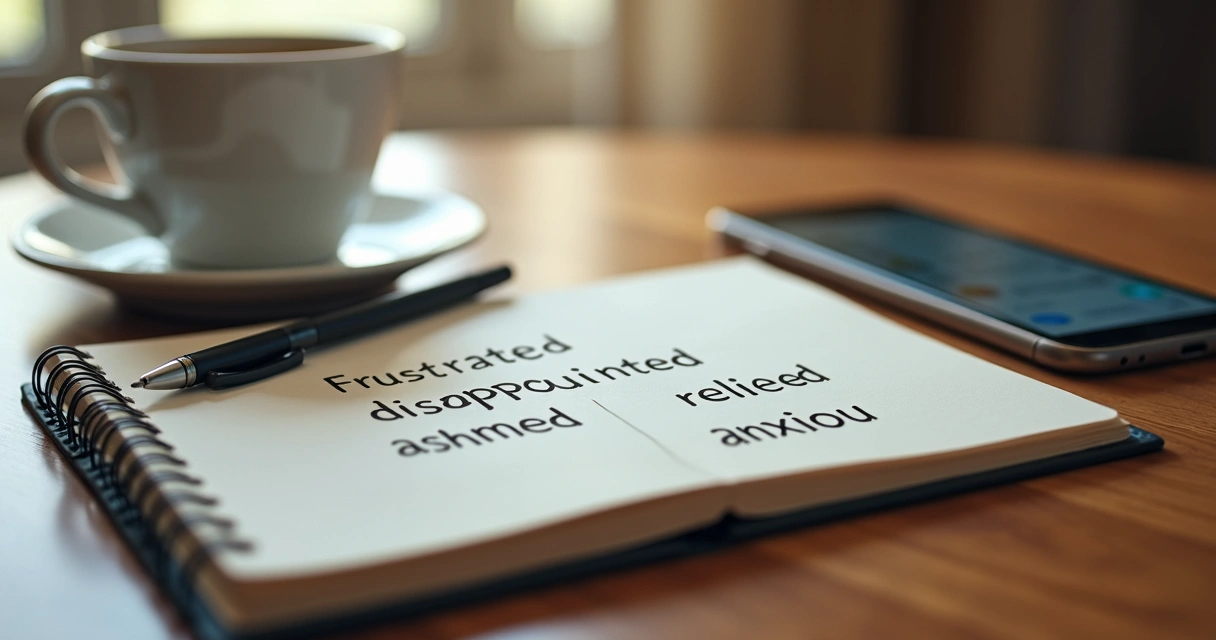
How we lose emotional detail during arguments
Under pressure, the mind seeks speed. It groups experience into rough categories so we can react quickly. That can help in danger, but in relationships it often creates distortion.
We may lose detail for several reasons:
We learned early that only a few emotions were acceptable to show.
We confuse bodily activation with one fixed meaning.
We speak before we pause long enough to notice what is happening inside.
We fear that naming a softer feeling will make us look weak.
Then a familiar pattern appears. We present anger because anger feels stronger than sadness, cleaner than confusion, safer than vulnerability.
Many arguments are shaped less by what we feel and more by the one emotion we allow ourselves to show.
There is also a trainable side to this skill. Research from Northeastern University found that intensive daily emotion tracking can increase emotional granularity. In simple terms, when we practice noticing and labeling feelings with care, our capacity can improve. We are not fixed at one level of emotional precision.
Simple practices for everyday situations
We do not need a perfect system. We need repeatable moments of attention. The following practices work well because they fit real life, not ideal life.
When tension starts rising, we can move in sequence:
Pause before the first reaction. Even ten seconds helps.
Name the feeling with at least two words, not one. For example, “I feel disappointed and exposed.”
Ask what triggered it. Was it tone, timing, silence, or a past wound being touched?
Notice the need under the emotion. Respect, repair, rest, clarity, or reassurance.
Speak from observation and feeling, not accusation.
A sentence structure can help:
I felt [specific emotion] when [specific event] happened.
For example, “I felt dismissed when my point was interrupted twice.” That is clearer than “You never listen.” It lowers the heat while keeping truth intact.
Another useful habit is to review conflict after it passes. We can ask ourselves:
What did I say I felt?
What was I actually feeling underneath?
At what moment did I stop being precise?
This kind of reflection builds maturity because it turns reaction into learning.
Emotional granularity and mental steadiness
Clear emotional differentiation does more than improve communication. It also supports inner steadiness. When we cannot distinguish feelings, distress can feel total. Everything blends. That makes us more likely to feel trapped by the moment.
A study published in the Journal of Research on Adolescence reported that adolescents whose negative emotional granularity dropped during the acute phase of the pandemic later showed higher social anxiety and depressive symptoms. This points to a protective role for emotion differentiation. The more accurately we can identify our state, the less likely we are to be swallowed by a vague wave of distress.
That same principle matters in conflict. If we can tell the difference between rejection, guilt, resentment, and overload, we are less likely to turn every hard interaction into a threat to the whole relationship.

Conflict style also changes with emotional skill
Not all conflict styles are equal. Some people avoid, some attack, some comply, and some seek dialogue. Emotional skill often shapes that choice more than people realize.
A study in the Journal of Nursing Management found a significant link between emotional intelligence competencies and preferred conflict-handling styles, with higher emotional intelligence relating to more effective ways of resolving conflict. We can see why. If we know what we feel, we do not have to defend ourselves against a blur. We can respond to the actual issue.
Better conflict often begins with better emotional distinction.
Conclusion
Emotional granularity is not a refined extra for calm days. It is a practical skill for tense moments. It helps us slow down, tell the truth with more care, and respond in a way that matches what is really happening inside.
We may still feel hurt. We may still disagree. We may still need boundaries, distance, or repair. But when we can say, with honesty, “This is frustration mixed with fear,” or “This is grief, not anger,” we stop fighting blindly.
That is where many daily conflicts begin to change. Not because emotion disappears, but because awareness becomes more exact. And from that point, choice becomes more possible.
Frequently asked questions
What is emotional granularity in conflict?
Emotional granularity in conflict is the ability to identify and name specific feelings during tension instead of using broad labels like bad, upset, or angry.
When we can tell whether we feel dismissed, ashamed, threatened, or disappointed, we understand our reaction better and communicate with more clarity.
How can I improve emotional granularity?
We can improve it by pausing during stress, expanding our emotion vocabulary, journaling after hard interactions, and naming at least two feelings instead of one. Daily reflection helps a lot.
It also helps to connect each feeling to a trigger and a need. Over time, that practice makes emotional labels more accurate and more natural.
Why does emotional granularity matter in arguments?
It matters because vague emotions often lead to vague reactions. When we only say “I am angry,” we may miss the deeper issue.
If we know that we feel humiliated, left out, or pressured, we can address the real wound instead of escalating the fight.
What are examples of emotional granularity?
Examples include saying “I feel overlooked” instead of “I feel bad,” “I feel trapped” instead of “I feel angry,” and “I feel uneasy and doubtful” instead of “I feel stressed.”
These finer distinctions help us match our response to the situation with more care.
Can emotional granularity reduce daily conflicts?
Yes. It can reduce daily conflicts by lowering misinterpretation, helping us speak more clearly, and making it easier to ask for what we actually need.
It does not remove disagreement, but it can stop small tensions from turning into larger and more painful patterns.