
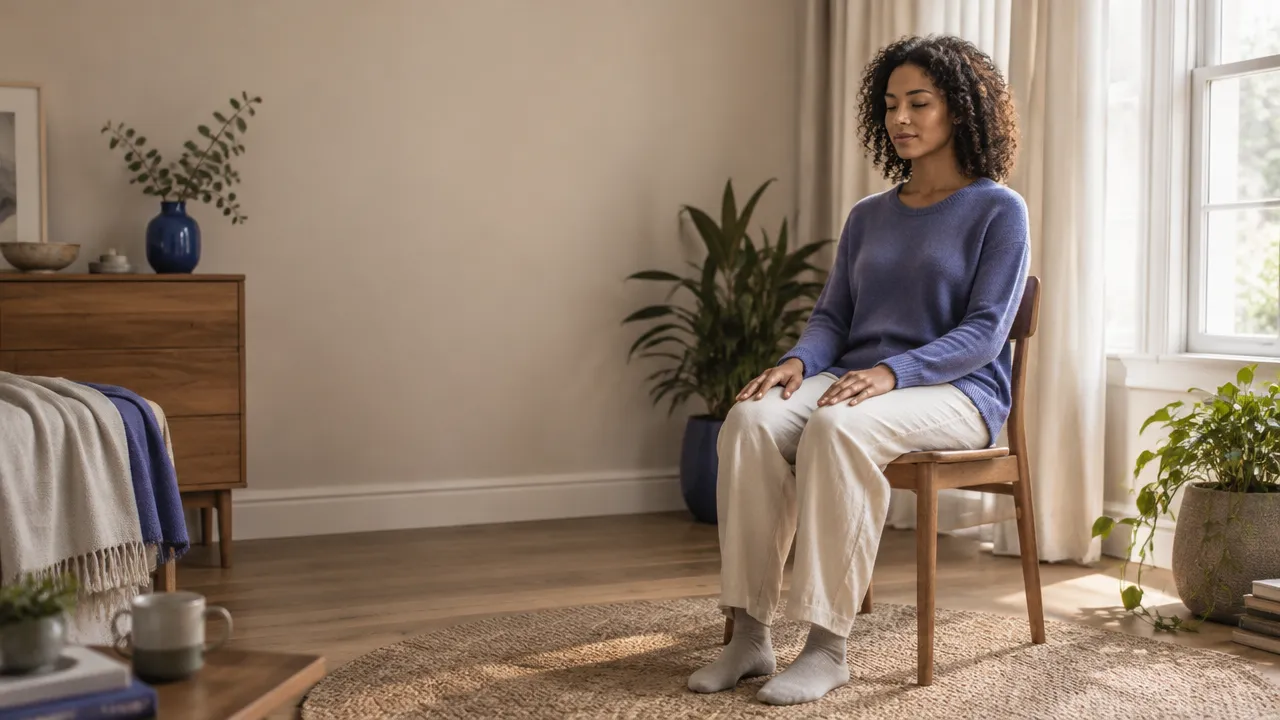
Meditation is a learnable practice of noticing where your attention has gone and choosing where to place it again. If you are new to it, you do not need a silent mind, special equipment, or a long session. Start with a few minutes of steady attention, then use the practice to understand your experience rather than escape it.
Key points for starting a steady practice
- Meditation is the act of returning attention, not forcing thoughts to disappear.
- A short, repeatable session is a better starting point than an ambitious routine.
- Choose an anchor that feels accessible, such as breath, sound, or physical contact with the floor.
- Notice what the practice reveals about your reactions, without using it to judge yourself.
Meditation trains attention, not a blank mind
The purpose of meditation is not to stop thinking. It is to notice thoughts, feelings, and sensations as they arise, then respond with greater choice instead of following every impulse automatically.
For example, you might sit down intending to focus on your breathing and soon begin planning tomorrow. The useful moment is not the distraction itself. It is recognizing that your mind has shifted and returning to the present without scolding yourself.
This distinction matters because sitting quietly can reveal patterns you usually miss: avoiding an uncomfortable feeling, rehearsing a conversation, or treating every thought as urgent. If reflection tends to become repetitive worry, practice distinguishing reflection from rumination as part of your approach.
How to begin with a simple five-minute session
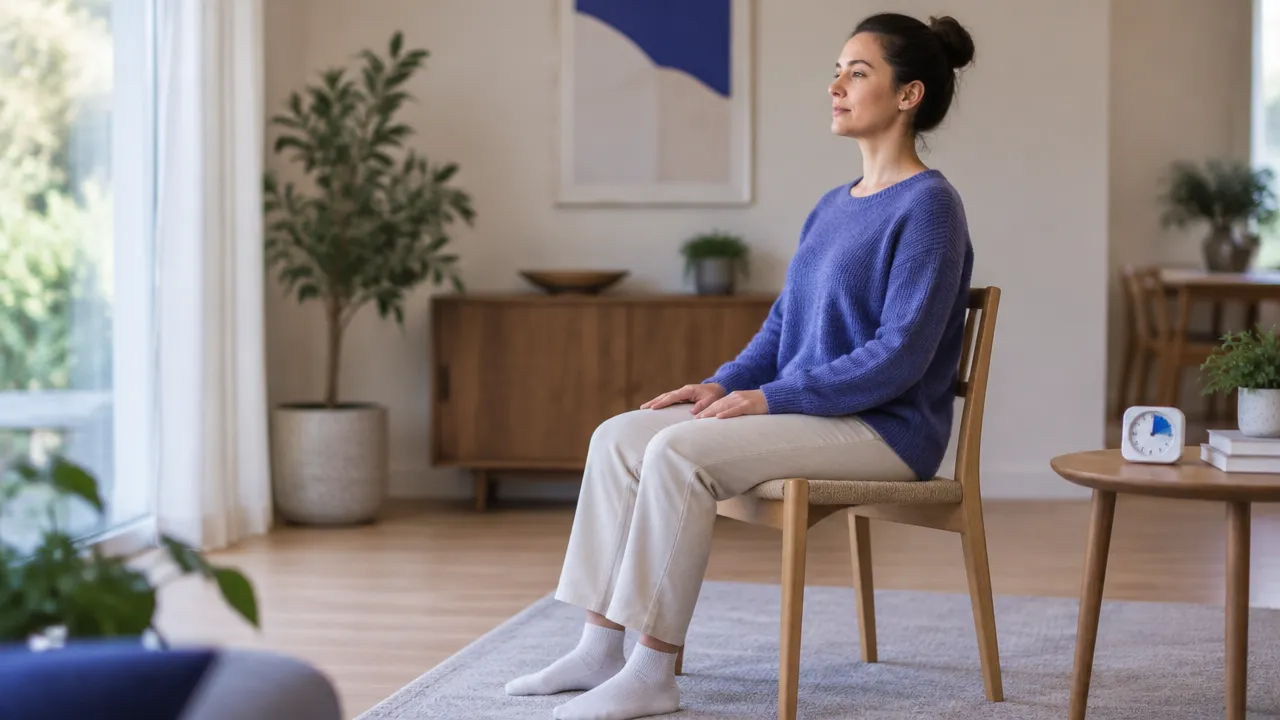
Begin with a posture that lets you feel alert and supported. A chair is fine; keep your feet on the floor and your hands relaxed. You can close your eyes or leave them softly open.
- Set a timer for three to five minutes.
- Choose one anchor, such as the breath at your nostrils, sounds in the room, or the contact of your feet with the floor.
- Notice what is happening without trying to make the experience different.
- When attention wanders, name the shift gently and return to the anchor.
- At the end, take a moment to notice your mood and body before moving on.
The return is the practice. If breath-focused attention feels uncomfortable, choose an external sound or the steady sensation of your feet instead. A short daily commitment can help make the practice feel familiar without turning it into another demand.
Choose a method that fits your attention
There is no single correct technique. Select one approach that feels practical, then give it enough time to learn what it is like before switching.
- Breath awareness: Follow the natural movement of breathing without trying to control it.
- Body awareness: Move attention through areas of the body and notice sensations, including tension or ease.
- Sound awareness: Listen to nearby sounds as they come and go, without searching for a particular one.
- Walking practice: Feel the movement of your feet and legs while walking at an unhurried pace.
If stillness makes you more restless, walking or sound awareness may be easier to begin with. If you want to explore how physical sensations can support self-understanding, try using bodily awareness for emotional clarity.
Build consistency without turning it into a test
A steady practice grows from a routine that fits your actual life. Attach a few minutes of meditation to an existing cue, such as sitting down after breakfast or pausing before your evening routine. Keep the place and method simple enough that you can begin without much preparation.
Missed days do not erase what you have learned. Resume at the next opportunity rather than doubling the session to compensate. The point is to build a reliable relationship with your attention, not to prove discipline through a perfect streak. A small daily commitment can strengthen trust through everyday follow-through.
After each session, note one observation if it is useful: perhaps you felt impatient, noticed a tight jaw, or found it easier to settle after walking. Keep the note descriptive, not evaluative. Over time, these observations can help you recognize patterns and make more conscious choices.
When meditation feels difficult
Restlessness, boredom, sleepiness, and strong emotions can arise during quiet practice. They are information about your present experience, not automatic signs of failure. You can shorten the session, open your eyes, change your anchor, or try a movement-based approach.
Meditation should not become a way to suppress emotions or pressure yourself into calm. If a practice feels overwhelming, stop and orient to your surroundings. You can return later with a gentler method, or seek support from a qualified professional if distress persists. The aim is greater presence and responsibility, not forcing a particular mood.
Frequently asked questions
How do I meditate for the first time?
Sit in a stable, comfortable position and choose one simple anchor, such as the feeling of your breath or your feet on the floor. Set a timer for a few minutes. When you notice your attention has wandered, acknowledge it without criticism and gently return to your anchor.
How long should beginners meditate?
Start with three to five minutes, then continue at that length until it feels manageable. A short session you can repeat is often more useful than a long session that feels like a test. Add time gradually only if it supports attention rather than pressure.
What should I do when my mind keeps wandering?
A wandering mind is normal, not proof that you are doing it wrong. The practice is noticing that attention has shifted and choosing where to place it again. You can silently label the distraction, such as planning or remembering, then return to your chosen anchor.
Can I meditate lying down?
Yes, you can meditate lying down, especially if sitting is uncomfortable. However, lying down may make it easier to fall asleep. If your aim is attentive practice, try a chair with your feet supported, or lie down with your eyes open and attention on physical sensations.