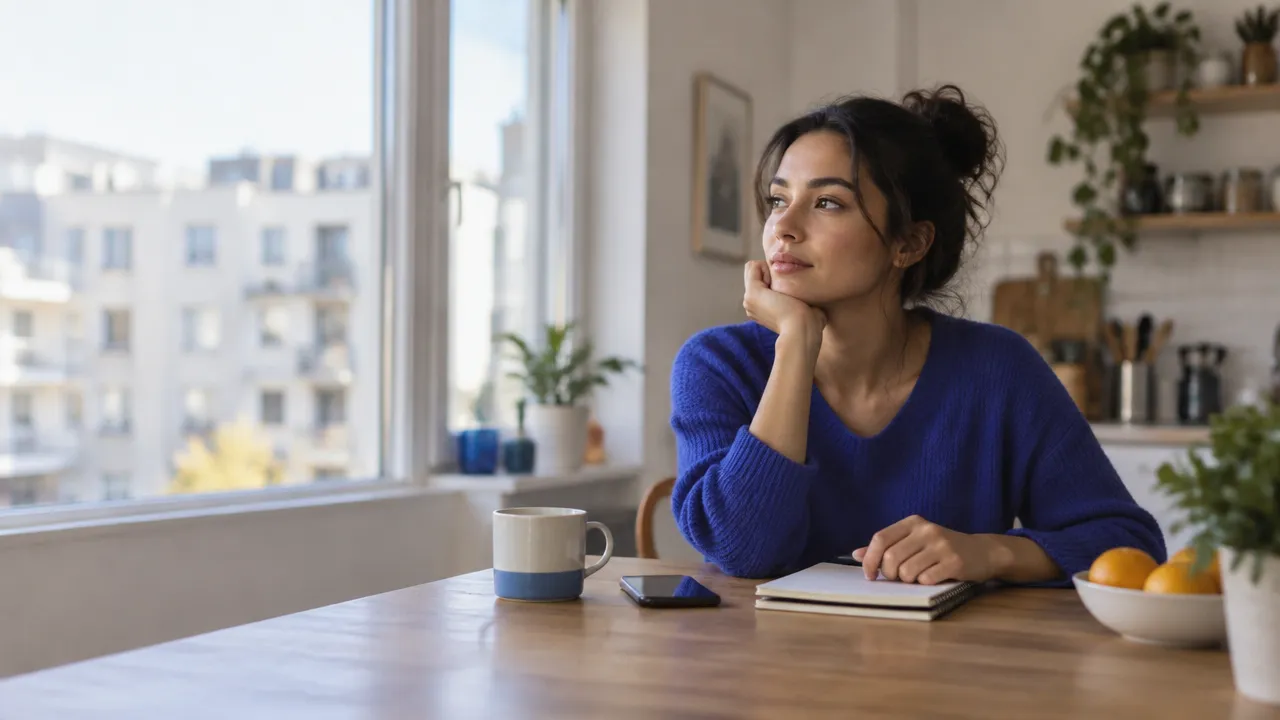
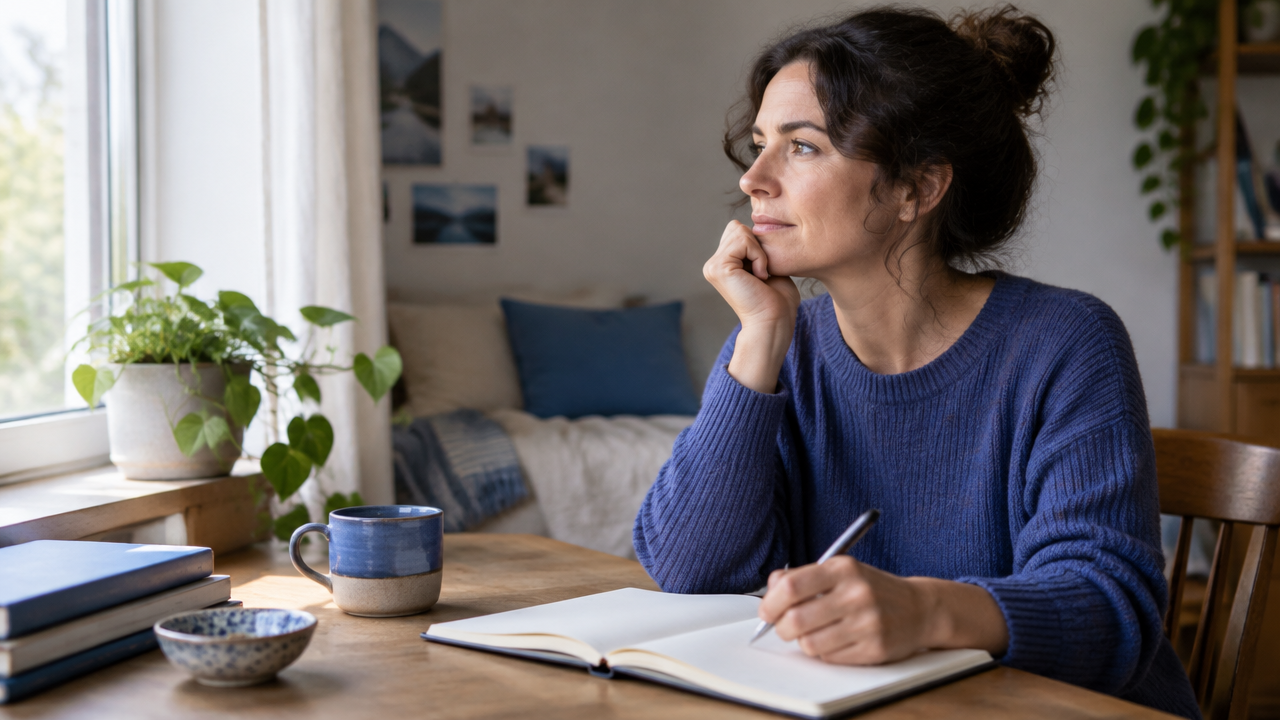
Your physical surroundings can make self-observation easier or harder by shaping what captures your attention, how much privacy you have, and whether pausing feels practical. They do not determine what you will discover about yourself. A useful environment is not a perfect room, but a setting that helps you notice your experience without immediately judging or avoiding it.
Key takeaways
- Spaces influence attention and routine through sensory conditions, visual cues, and practical friction.
- A calmer or more organized room does not guarantee insight, and a busy room does not make reflection impossible.
- Small, repeatable changes often matter more than redesigning an entire home.
- Use self-observation to identify patterns, not to grade your emotions or productivity.
Your surroundings shape the conditions for noticing, not the truth you find
The physical environment affects the conditions in which reflection happens. A notification, a crowded surface, an uncomfortable chair, or a lack of privacy can interrupt attention. A familiar cue, such as sitting in one particular chair after work, can help make a pause easier to remember.
But a setting cannot tell you what an emotion means. The same quiet room may feel restorative one day and isolating the next. Your history, current stress, physical needs, and relationships all shape how you experience a place. Treat the room as part of the context, not as a diagnosis or an explanation by itself.
This distinction keeps reflection responsible. Instead of saying, “This space makes me anxious,” try asking, “What do I notice here, and what else might be contributing?” That question leaves room for both environmental influences and your broader life circumstances.
Which features of a space can affect self-observation?
Pay attention to a few concrete features before trying to change your surroundings. They can affect whether you can settle, stay present, and respond honestly to what you notice.
- Sensory load: Noise, bright light, strong smells, or frequent movement may compete for attention. Preferences differ, so observe your own response.
- Privacy: If you expect to be interrupted or overheard, you may avoid writing candidly or sitting with a difficult feeling.
- Physical comfort: Temperature, seating, and access to water or a needed mobility aid can affect whether the routine is sustainable.
- Visible cues: A notebook in sight may prompt a pause. A phone or unfinished task may prompt a different response.
- Personal associations: A room connected with conflict, rest, or work may bring up expectations before you begin.
These are prompts for observation, not universal rules. A tidy desk is not inherently better for reflection than a lived-in kitchen table. The useful question is whether the space supports your actual needs and the kind of attention you want to practice.
Five settings can invite different kinds of reflection
Physical environments include more than rooms. A familiar indoor corner, a shared workplace, and an outdoor path each have different cues, privacy, and demands. Comparing settings can help you find an option that fits the moment.
| Setting | What to notice | Possible adjustment |
|---|---|---|
| Home desk | Whether work items keep pulling your attention back | Clear one small area or close the work device |
| Kitchen table | Whether household activity makes privacy difficult | Choose a quieter time or keep the reflection brief |
| Outdoor bench | Whether movement, weather, or nearby people feel distracting or grounding | Pick a familiar, accessible spot and a comfortable duration |
| Private room at work | Whether you can pause without feeling observed or rushed | Use a short check-in during a realistic break |
| Chair before bed | Whether the routine supports noticing or turns into replaying the day | Write one observation and one next step, then stop |
None of these settings is best for everyone. Notice which one makes it easier to be specific about your experience while respecting your energy, responsibilities, and need for privacy.
Build a reflection habit with small environmental cues
A useful setting lowers the effort needed to begin without turning self-observation into another performance target. Try a small experiment rather than waiting for ideal conditions.
- Choose a repeatable moment. Link a brief check-in to something that already happens, such as arriving home or finishing lunch.
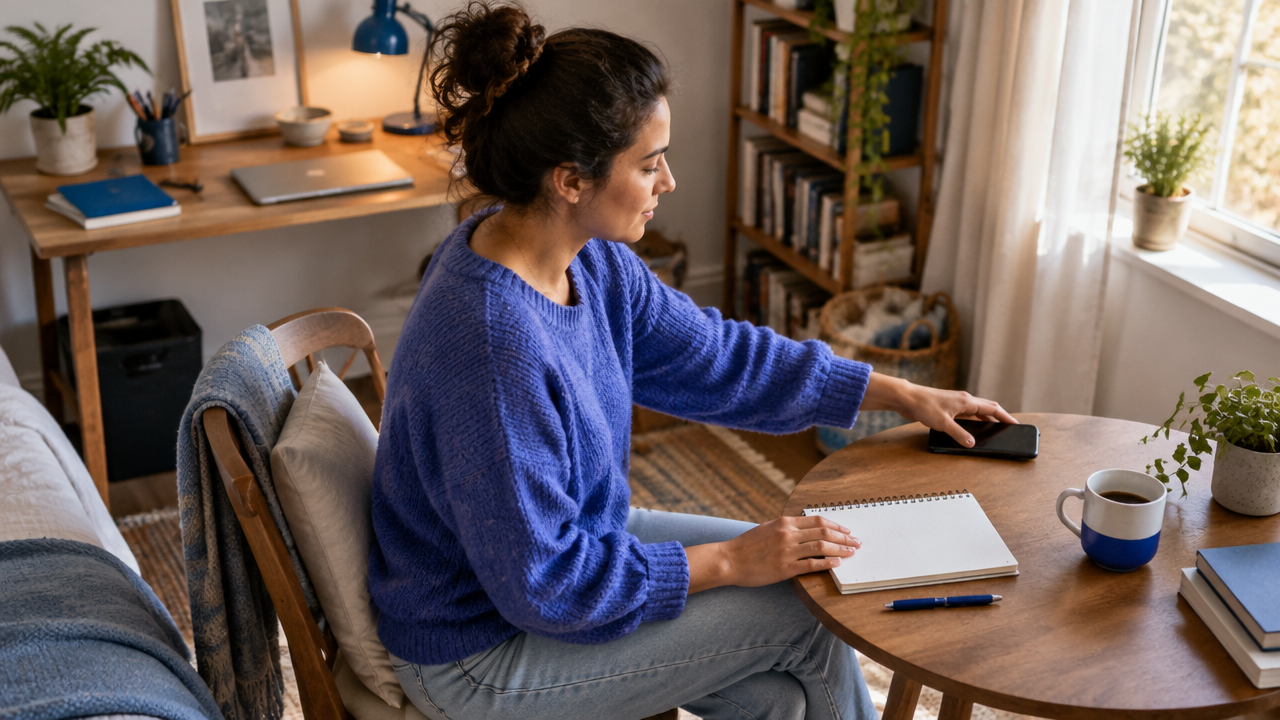
- Make one cue visible. Put a notebook or a simple prompt where you will see it, if that feels inviting rather than pressuring.
- Reduce one interruption. Silence a device, move it out of reach, or choose a time with fewer interruptions.
- Check your body and emotions. Ask what you feel, what you notice physically, and what was happening just before the feeling arose.
- End with choice. Decide whether you need rest, a conversation, a practical action, or simply more time to understand what you noticed.
Keep the practice short enough to repeat. If a cue starts to feel like a demand, change it. The purpose is to strengthen awareness and choice, not to create a flawless ritual.
How can you tell whether a setting is helping?
Look for a pattern across several occasions rather than judging a space from one unusually good or difficult day. After a short check-in, note where you were, what interrupted you, and whether you could name an emotion or need without immediately dismissing it.
Change one feature at a time, such as moving the phone or choosing a different chair. This makes it easier to notice what actually changes. If the practice becomes more self-critical, overwhelming, or repetitive, shorten it, shift the setting, or pause. Self-observation should support understanding and responsible action, not pressure you to monitor yourself constantly.
Frequently asked questions
How can physical surroundings shape behavior?
Physical surroundings shape behavior by making some actions easier to notice and begin than others. A visible notebook can remind you to pause, while noise, interruptions, or a phone within reach may pull attention outward. These are influences, not guarantees: habits, energy, privacy, and personal associations also matter.
What aspects of a room can affect self-observation?
Light, noise, comfort, privacy, and visible objects can all affect how easy it feels to pause and notice your experience. Their effects vary from person to person. Instead of assuming a feature is helpful or harmful, observe what happens to your attention and feelings in that setting.
Can spending time in nature support self-observation?
A natural setting can offer a change of pace and fewer familiar household cues, which some people find helpful for reflection. It is not automatically calming or suitable for everyone. Weather, safety, accessibility, sensory preferences, and privacy all influence whether an outdoor setting feels supportive.
Do I need a dedicated space to build a reflection habit?
No. A dedicated reflection area can make a routine easier to remember, but self-observation does not require a special room, journal, or quiet home. You can use a familiar chair, a short walk, or a private moment in an ordinary space. Choose what is accessible and repeatable.
What are five examples of physical environments for reflection?
Five useful examples are a home desk, a kitchen table, a quiet outdoor bench, a private room at work, and a familiar chair before bed. Each offers different cues and constraints. Notice which setting helps you pause without feeling watched, rushed, or pulled into another task.